Greek Orthodox Archdiocese of America Metropolis of Atlanta
Father Andrew Maginas, Protopresbyter FrAndrewMaginas@mail.goarch.org
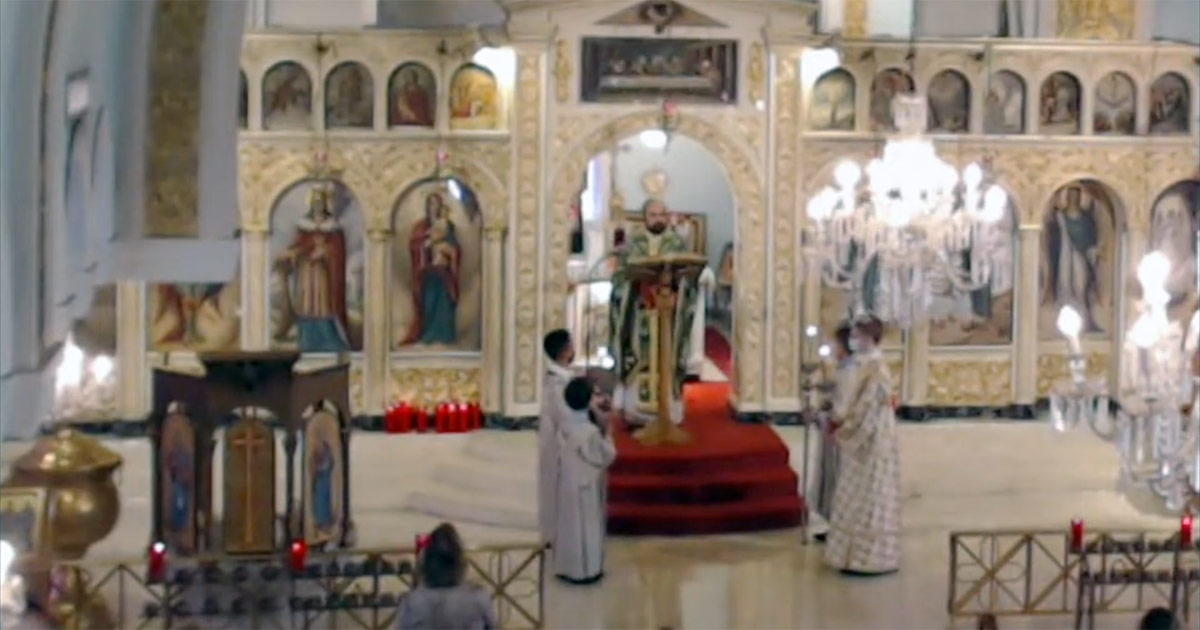
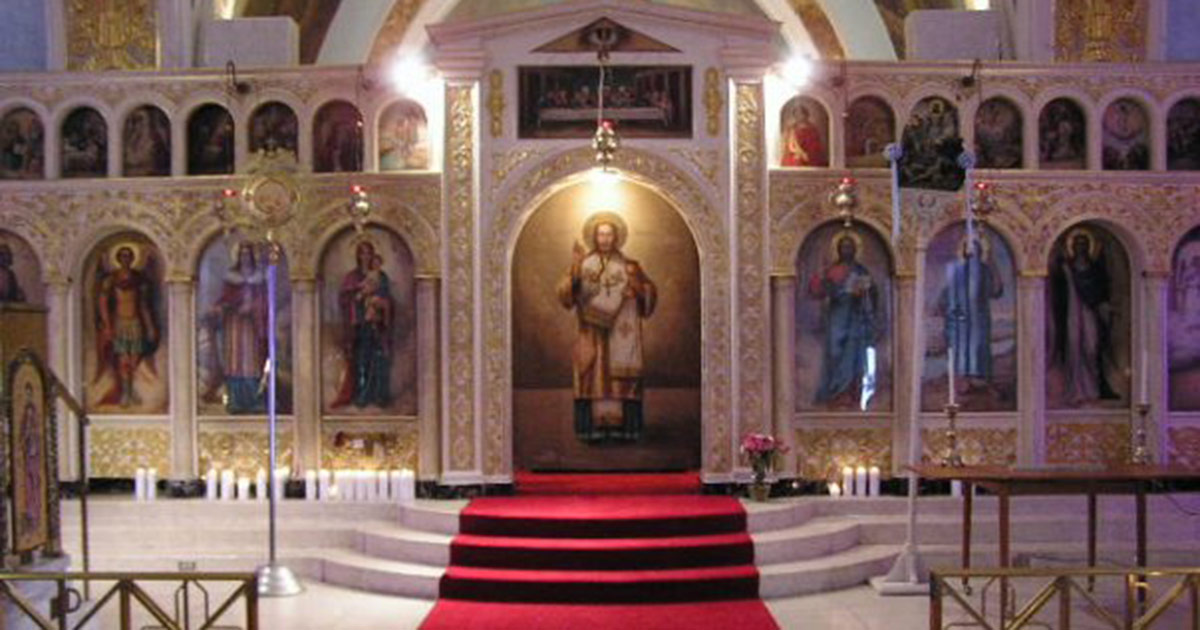
The Iconostasion during Bright Week
Online Chapel Read today's prescribed Epistle and Gospel passages and learn about the saints commemorated by the Church on this day
Orthodox Calendar Our online calendar listing the major saints, feasts, and fasting periods in the Orthodox Church for this month
Featured Video Enjoy a weekly video feature by GOTelecom on our Church's faith and life.
Iconograms Send electronic icon greeting cards to your family, friends or loved ones on their name day or any special occasion.
Our services are streamed live Check the calendar for the schedule. Click on the above photo to begin. We are only broadcasting during the services.
Christ Pantocrator
Saint Catherine Greek Orthodox Church, West Palm Beach
There is a problem with the buttons for The Ark and The Rudder.
OCN has changed streaming server sites. We will update the buttons shortly. In the meantime access The Ark, The Rudder and Come Receive The Light at www.myocn.net
+ Fr. Andrew
Fr. Andrew's May/June Lamplighter message
Lent, Holy Week and Pascha: A Retrospective and a look behind the scenes: A great experience for all whose participation made this year’s journey truly spiritually moving. ______________
Let us begin with a brief look at our Orthodox Christian worship. We gather as a praying community. Our liturgical celebrations are occasions of prayer. Our premier service is the Divine Liturgy, which literally means “the work of the people.”
During the Divine Liturgy we sing hymns of praise, read and listen to readings from the New Testament, specifically from the Acts of the Apostles and the Epistles as read by the lay readers and psaltes (cantors). The deacon or priest reads from the Gospels (the life and teaching of our Lord, Jesus Christ).
The homily (sermon) is delivered at this point. The homily brings the scripture to us in forms that continue to teach us Jesus’ words to his disciples. We see how we must apply His teaching to our 21st century lives.
The Divine Liturgy continues with the presentation of the gifts (bread and wine) at the Altar. We pray the Holy Spirit to make this offering the Body and Blood of our Lord. Here we remember the Eucharist which He instituted with His disciples at the Passover meal we know as The Last Supper.” And He took bread, gave thanks and broke it, and gave it to them, saying, “This is My body which is given for you; do this in remembrance of Me.” Likewise He also took the cup after supper, saying, “This cup is the new covenant in My blood, which is shed for you.” (luke 22:19-20, nkjv)
Orthodox Christian is worship of our Lord pure and simply. It is not, and does not attempt to be, a musical entertainment nor a lengthy theological religious discourse. We all participate. All of our senses are involved in the Divine Liturgy. The end of the Liturgy leaves us as full of joy as was the joy of “Mary Magdalene and the other Mary” when they came to the tomb after the Sabbath and the angel told them “He is not here; for He is risen, as He said.” “So they went out quickly from the tomb with fear and great joy, and ran to bring His disciples word.” (selections from matthew 28:1-8)
It is unfortunate that a number of Orthodox continue to confuse the Divine Liturgy with the Mass of the Roman Catholic Church. An important point to remember is that the Divine Liturgy, being the work of the people, requires the presence of both the presbyter and lay people in order to be celebrated.
The Great Lent and Holy Week involve us in an even more intense experience of the presence of the risen Lord in our lives. During the services which include Vespers, Orthros (Matins), Apodipnon (Compline), Great Hours and Presanctified Liturgy we read and listen to additional scriptures which include: Old Testament Psalms, narratives of the creation, and of God’s chosen people, and prophesies. Among the readings which I look forward to each year are those on Holy Saturday morning, from Genesis and the prophesies of Jonah and Daniel. It is wonderful that the new Orthodox Study Bible (Old and New Testament with Orthodox commentaries) includes these and the more obscure readings of Lent such as from the book of Baruch (the story of a Jewish community that repents). The Old Testament of our Church includes more books than do the Protestant and Roman Catholic Bibles.
Great Lent, Holy Week and Pascha are experienced deep within each of us in many ways. There are also traditions which vary in different parts of Greece and in the other countries that our parishioners come from. Many parishioners give of themselves in differing ways during this serious spiritual period. I reserved two pages for my retrospective-introspective of the most precious liturgical period of our church. I should have set aside a bit more. What follows is a rough timeline of events, services and activities during Lent.
At the beginning of the Great Lent the Altar coverings are changed to the purple of Great Lent at the Forgiveness Vespers the evening before Kathara Deftera (Clean Monday, the beginning of Great Lent). . . . Many took time to remember their departed loved ones at the Saturday of Souls (Psihosavata) Liturgies. . . Sunday of Orthodoxy, the Archons, Parish Council members, and appointed parishioners held icons for the procession of the icons. . . . The afternoon before there was a South Florida celebration of the icons in Miami at Saint Sophia Cathedral.
Certain parishioners decorated the icons the five Fridays of Salutations and Akathistos. . . . We were blessed with many psaltes throughout Lent (local, visiting, snowbirds, and new eager volunteer). . . . Several psaltes, our choir director and a choir member chanted the special prayers to Christ and the Virgin Mary. . . . Our choir really makes the services beautiful. . . . We do not know how many; but a lot of faithful locally and far away watched our services on the internet via a link on our website. The constructive thoughts some offered helped us improve. . . . Several parishioners prepared the lenten meal for the five Fridays after the service. . . . Many attended the meals and the studies which followed.
We were supplied with excellent prosfora for all of the services. . . . A special labor of love preparing the decorative tray for the 3d Sunday, the Holy Cross. The Sunday of the Holy Cross is bright point, a symbol of encouragement, in the midst of the rigors of the fasting of Great Lent. . . . The 25th of March Greek Independence Day Celebration hosted by the Hellenic Studies School and AHEPA was also a bright point at the middle of Great Lent. . . . The children participated in the annual Youth Retreat the Friday before Palm Sunday. Many came for Confession.
A standing order from a church supply company in Tampa, for palms for our (Orthodox) Palm Sunday is verified when Lent begins. The Palms were folded the Saturday of Lazaros after Liturgy. . . . One generation passing on the craft to the next. About 40 individuals, from young children to retirees this year made over 1500 palm crosses.
The Palm Sunday luncheon. Our Philoptochos and chefs worked diligently for a beautiful presentation. . . . The ladies had been baking for weeks for the bake sale . . . Holy Week began that evening. . . . The procession of the Bridegroom icon. . . . Acolytes were there for all the extra services. More new readers came up to the psaltiri to help. We have hidden talents. . . . We have gathered many Holy Weeks books for the acolytes over the years so they can participate. Father Gregory was on hand to both concelebrate and assist – God Bless You! . . . There are special preparations for some of the Holy Week services. Holy Wednesday afternoon, the Sacrament of Holy Unction. . . . Anointing supplies and the little squares of foil that are pre cut for packaging the unction for those who are not able to attend the service. . . . Helpful assistants packaged the Unction in the foil. . . . Our egg dying and wrapping crew was hard at work on Holy Thursday. . . . Special floral arrangements were donated. . . . The reading of the twelve gospels and those who kept the vigil with the crucified Lord. . . . A sheet is donated for wrapping Jesus as he is removed from the Crucifix at the Apokathilosis on Holy Friday. . . . special dedication to keep the church open between the Apokathilosis and the Lamentations. . . . The mirofores and the parents helped prepare them.
“Epitafio”, Kouvouklion decoration, chaired by Ed Mitchell; co chairs Kathy Plevrakis, Kathy Andreadis and Maria Balasis with the help of many, many volunteers of all ages.
Just before Great Lent, candles were ordered based on last year’s usage as were the drip cups for Holy Friday and Holy Saturday. . . . The ushers prepared candles ahead for Holy Friday and Holy Saturday evenings and opened up early on Holy Saturday evening. . . . The clergy pascal candles were ordered in mid Lent and decorated on Holy Saturday for the Anastasis. . . . A special group of Parish Council members and invited parishioners received the light at the Anastasis and brought it to the congregation.
Blessing to those who read the Gospels in many languages at the AGAPE Vespers on Pascha afternoon. . . . This year ten languages were read: the original Greek, French, Arabic, English, Modern Greek, Spanish, Russian, Romanian, Italian, and Albanian. . . . St Rafael and St George Liturgies were celebrated during Bright Week
We sincerely thank all the participants, volunteer, workers. Each received a special blessing; all shared the up lifting and spiritual renewal of our body and souls. Christos Anesti! Christ is Risen!
Christ is Risen from the dead, trampling down death by death, and upon those in the tombs bestowing life!